Have you ever wondered how long is 1 inches when you don’t have a ruler nearby? Whether you’re measuring a small object, working on a DIY project, shopping online, or simply trying to understand dimensions, knowing the size of one inch can be surprisingly useful.
One inch is exactly 2.54 centimeters (cm) or 25.4 millimeters (mm). Although this is a relatively short distance, it can be difficult to visualize if you’re more familiar with the metric system.
How Long Is 1 Inch?
8 Everyday Objects That Show Its Size
Discover how long 1 inch is with 8 familiar everyday objects. Learn its exact length and visualize this measurement with simple comparisons.
How Long Is 1 Inch?
One inch is a unit of length used in the imperial and US customary measurement systems. Its value is fixed internationally, making it easy to convert into metric units.
The exact measurement is:
- 1 inch = 2.54 centimeters
- 1 inch = 25.4 millimeters
- 1 inch = 0.0254 meters
- 1 inch = 1/12 of a foot
- 1 inch = 1/36 of a yard
For example, if you look at a ruler with both inches and centimeters, you’ll notice that one inch is slightly longer than two and a half centimeters.
The easiest way to understand this measurement is to compare it with objects you recognize.
See Also: https://measurezhub.com/
8 Everyday Objects That Help You Visualize 1 Inch
The following objects can help you estimate the size of one inch. Remember that most everyday objects are not manufactured to exactly one inch, so these are visual comparisons rather than precision measuring tools.
1. A Bottle Cap
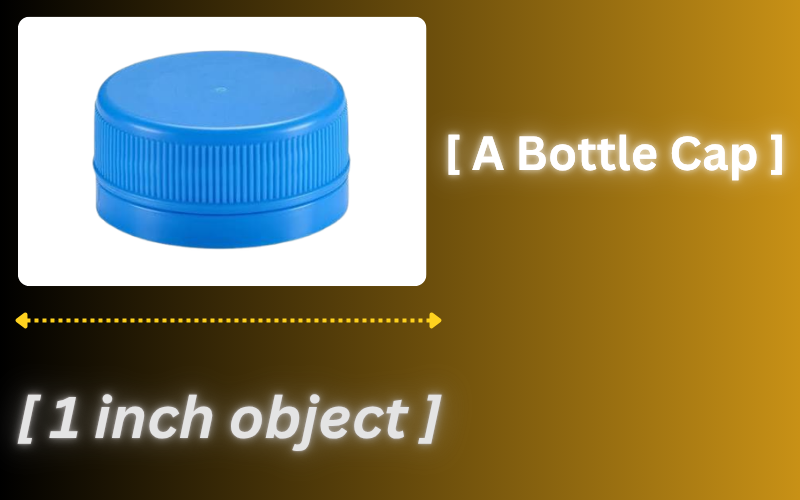
A small bottle cap is a convenient object to use when imagining one inch.
Many household bottle caps have a diameter close to one inch, although their dimensions depend on the type of bottle and manufacturer.
For example, a cap from a small water bottle may look approximately one inch across. However, larger drink bottles and other containers can have noticeably different cap sizes.
How to compare it:
Place the cap on a flat surface and look at its widest circular measurement. Imagine that distance as a rough reference for one inch.
Why it’s useful:
Bottle caps are common household objects, making them convenient for a quick visual estimate.
2. A Paperclip
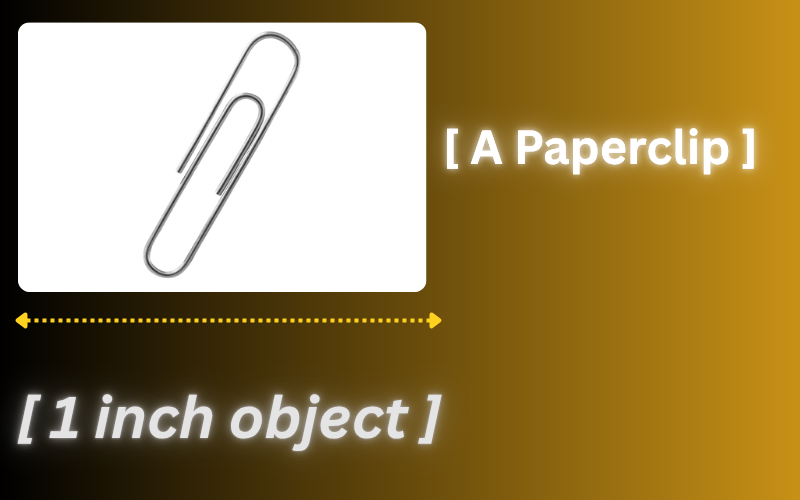
A standard small paperclip can also help you picture a measurement close to one inch, depending on its design.
Paperclips come in several sizes, including small clips and longer clips used for holding larger stacks of paper. Therefore, not every paperclip is a suitable one-inch reference.
How to compare it:
Look at a small paperclip and compare its shorter dimension or overall length with a ruler. If it measures approximately one inch, you can keep it as a reference for future estimates.
Why it’s useful:
Paperclips are lightweight, easy to handle, and commonly found in school and office supplies.
3. The Width of Your Thumb
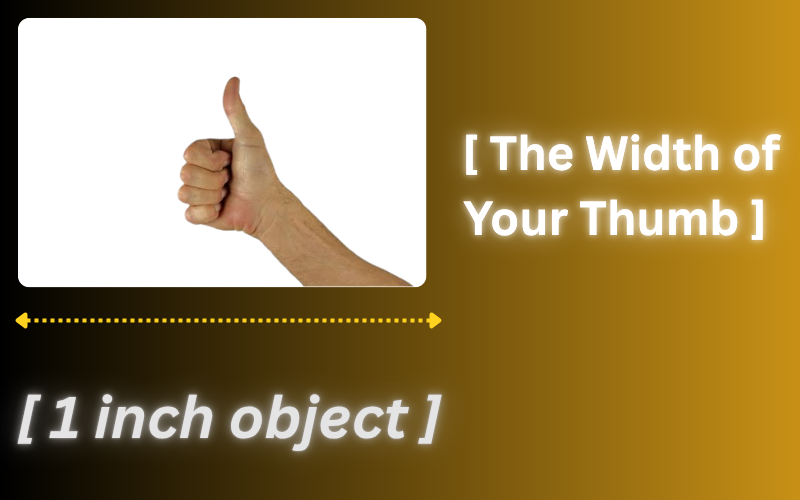
Your thumb can provide a personal reference for estimating one inch.
For some people, the width of the thumb near a particular joint may be close to one inch. However, thumb dimensions vary considerably from person to person.
How to compare it:
Place your thumb next to a ruler and observe its width. Find the point where its width is closest to 2.54 centimeters.
You can use that point as your own rough measurement reference.
Why it’s useful:
Unlike a household object, your thumb is always available when you need a quick estimate. Just remember that it is not a standardized measuring instrument.
4. A Small Button
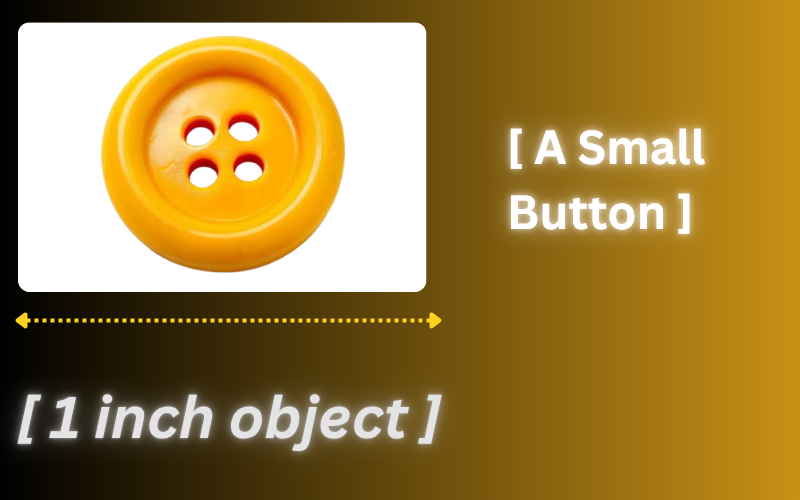
Some small buttons used on shirts, jackets, and craft projects have a diameter close to one inch.
Buttons are available in many different sizes, so this comparison works only when you have checked the button’s actual diameter.
How to compare it:
Place a button flat on a table and measure straight across its center. If its diameter is around 2.54 centimeters, it provides a useful one-inch example.
Why it’s useful:
Buttons can be particularly helpful when working on sewing, clothing repairs, or small craft projects.
5. A Small Sticky Note
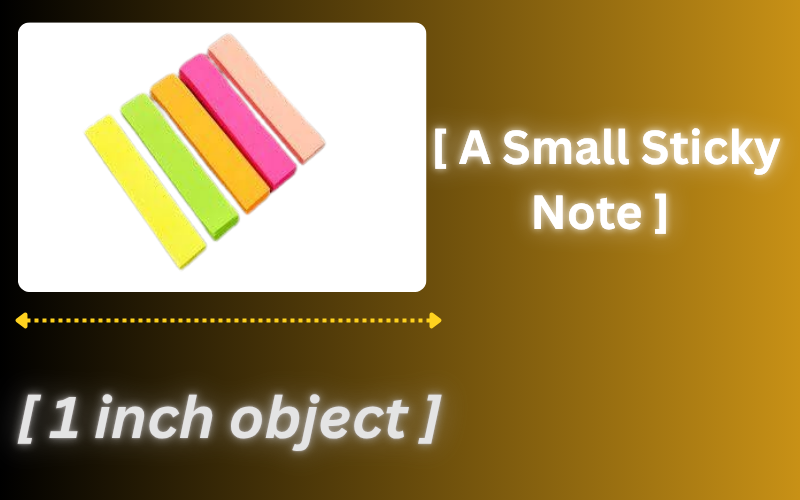
A sticky note can help you visualize one inch by using its edges as a reference.
For example, a square sticky note measuring three inches on each side contains three one-inch sections along each edge.
This makes it useful for understanding how one inch relates to a larger measurement.
How to compare it:
If your sticky note is three inches wide, imagine dividing that width into three equal sections. Each section represents one inch.
Check the actual dimensions of your sticky note first because not all sticky notes have the same size.
Why it’s useful:
Sticky notes are flat and have straight edges, making them useful for visualizing and comparing lengths.
6. A Small Coin
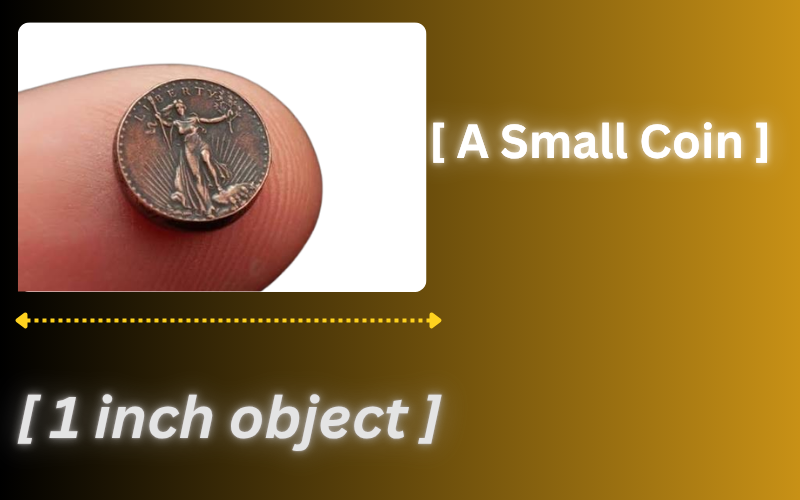
Coins can provide another familiar reference for understanding one inch.
For example, a US quarter has a diameter of approximately 0.955 inch, which is close to one inch but not exactly equal to it.
This makes it a useful example of a measurement that is slightly smaller than one inch.
How to compare it:
Place the coin on a table and look at its diameter. Imagine extending the measurement slightly to reach a full inch.
Coins from different countries have different dimensions, so always identify the coin before using it for comparison.
Why it’s useful:
Coins are easy to recognize and provide a helpful visual reference for understanding small measurements.
7. A Small Eraser
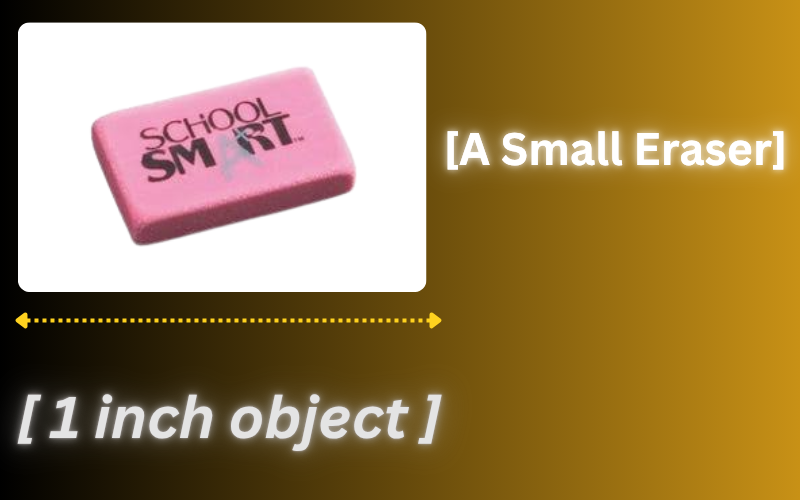
Some small rectangular erasers have one dimension close to one inch.
However, erasers are manufactured in many different shapes and sizes. A large eraser may be several inches long, while a small pencil-top eraser may be much shorter.
How to compare it:
Place the eraser next to a ruler and check its width, height, or length. If one of these dimensions measures approximately 2.54 centimeters, you have a convenient one-inch example.
Why it’s useful:
Erasers are common school supplies and can help students connect everyday objects with measurement concepts.
8. A Small Craft Cube
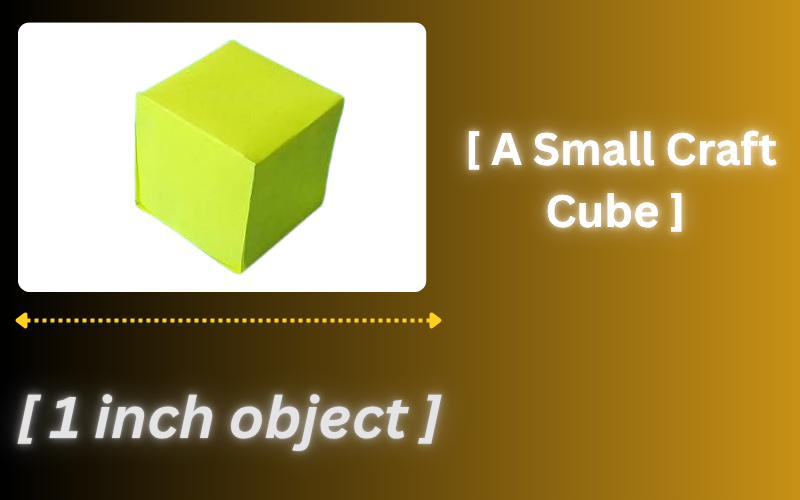
A one-inch craft cube is a particularly useful reference because it can be manufactured with sides measuring exactly one inch.
Unlike an ordinary bottle cap or button, a cube labeled as one inch can provide a reliable reference if its dimensions have been verified.
A cube measuring one inch on every side has:
- Length: 1 inch
- Width: 1 inch
- Height: 1 inch
Each side measures 2.54 centimeters.
How to compare it:
Look at one edge of the cube. That edge represents exactly one inch if the cube is accurately manufactured to the specified dimensions.
Why it’s useful:
Craft cubes can help with school activities, measurement demonstrations, model-making, and understanding three-dimensional objects.
Comparison Table: 8 Objects and One Inch
| Everyday object | How it compares with 1 inch |
|---|---|
| Bottle cap | Some caps are approximately 1 inch across |
| Paperclip | Some small clips are around 1 inch |
| Thumb | May be close to 1 inch wide |
| Small button | Some buttons have a diameter near 1 inch |
| Sticky note | Can be divided into 1-inch sections |
| US quarter | 0.955 inch across |
| Small eraser | Some dimensions may be close to 1 inch |
| Craft cube | Can measure exactly 1 inch per side |
These comparisons are useful for visualizing measurements, but you should use a ruler whenever accuracy matters.
How to Measure 1 Inch Without a Ruler
If you don’t have a ruler, you can still make a rough estimate using a familiar object.
First, choose an object that you have already measured, such as a small button or bottle cap. Compare the object with the distance you want to estimate.
Another option is to use your thumb as a personal reference. Measure it once when a ruler is available, then remember which part of your thumb is closest to one inch.
You can also use a phone or computer to display a measurement guide, but don’t assume that an image shown on a screen is physically one inch long. Screen size, zoom, and display settings can change how large it appears.
For accurate measurements, a ruler, measuring tape, or suitable measuring tool is still the most reliable choice.
How Long Is 1 Inch Compared to 1 Centimeter?
An inch is longer than a centimeter.
One inch equals 2.54 centimeters, meaning it is more than two and a half times the length of one centimeter.
Here’s a simple comparison:
| Measurement | Equivalent |
|---|---|
| 1 inch | 2.54 cm |
| 1 centimeter | 0.3937 inch |
| 2 centimeters | 0.7874 inch |
| 2.5 centimeters | 0.9843 inch |
| 3 centimeters | 1.1811 inches |
If you’re familiar with centimeters, imagining a distance slightly longer than 2.5 centimeters is a useful way to picture one inch.
Where Are One-Inch Measurements Used?
One-inch measurements appear in many everyday situations.
Home improvement: Some screws, fittings, hardware, and furniture components are described using inches.
Crafts and school projects: Paper cutouts, small models, decorations, and craft supplies may use inch measurements.
Printing and design: Designers may use inches to specify the physical dimensions of printed materials.
Shopping online: Product listings may display the length, width, height, or screen size of items in inches.
Sewing: Fabric patterns, seam allowances, buttons, and other sewing measurements may use inches.
Understanding the relationship between inches and centimeters makes these measurements easier to interpret, especially when comparing products from different countries.
FAQs
1. How long is 1 inches in centimeters?
The grammatically correct phrase is “how long is 1 inch?” One inch is exactly 2.54 centimeters.
2. How many millimeters are in one inch?
One inch equals exactly 25.4 millimeters.
3. Is one inch bigger than one centimeter?
Yes. One inch is 2.54 centimeters, so it is more than twice as long as one centimeter.
4. Can I use my thumb to measure one inch?
You can use your thumb for a rough estimate, but its width depends on the individual. For accuracy, compare it with a ruler first.
5. Is a US quarter exactly one inch?
No. A US quarter has a diameter of approximately 0.955 inch, making it slightly smaller than one inch.
6. What is the easiest way to remember one inch?
Remember that one inch equals 2.54 centimeters or 25.4 millimeters. A verified one-inch object, such as a precision measuring block, can also help you visualize the distance.
See Also: https://measurezhub.com/
Conclusion
So, how long is 1 inches? One inch is exactly 2.54 centimeters or 25.4 millimeters. It is a small but useful measurement that appears in shopping, crafts, home improvement, printing, and many other everyday activities.
Objects such as bottle caps, paperclips, buttons, coins, and your thumb can help you visualize approximately one inch. However, their sizes are not standardized, so they should only be used for estimation.
If you need an accurate measurement, use a ruler or another suitable measuring tool. Once you understand the relationship between inches and centimeters, comparing dimensions becomes much easier.