
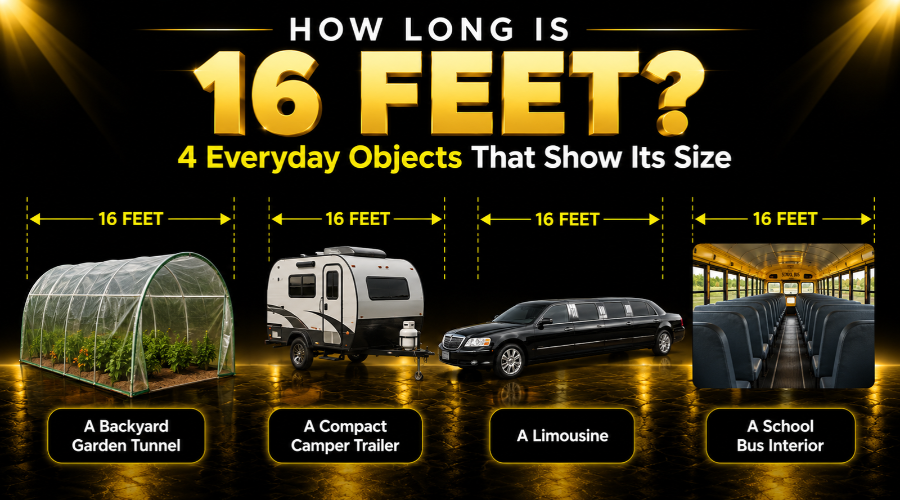
Understanding how long 16 feet is can be challenging when you do not have a measuring tape or a familiar reference nearby. Whether you are planning a home improvement project, arranging outdoor furniture, estimating a vehicle’s size, or measuring a garden, comparing this distance with real-world objects can make it much easier to visualize.
Sixteen feet is a little less than five meters. It is a substantial length that can span a large outdoor structure, part of a vehicle, or an extended work surface. Once you understand its dimensions, estimating space for different projects becomes easier.
How Long Is 16 Feet?
8 Everyday Objects That Show Its Size
Discover how long 16 feet is with 8 familiar everyday objects. Learn its exact length and visualize this measurement with simple comparisons.
Quick Answer: How Long Is 16 Feet?
Sixteen feet is equal to 192 inches, 4.8768 meters, or 487.68 centimeters. It is just under five meters long and can be visualized as a long vehicle section, an extended garden structure, or a commercial work surface.
Here are the most useful conversions:
| Measurement Unit | Equivalent to 16 Feet |
| Feet | 16 feet |
| Inches | 192 inches |
| Yards | 5.33 yards |
| Meters | 4.8768 meters |
| Centimeters | 487.68 cm |
| Millimeters | 4,876.8 mm |
A distance of 16 feet can be useful when estimating the dimensions of a patio, planning a garden installation, arranging restaurant equipment, or checking whether a large item will fit into a particular space.
Related Posts: How Long Is 15 Feet? Discover 8 Everyday Size Comparisons
8 Objects That Help You Visualize 16 Feet
The following eight comparisons make the measurement easier to picture. Some examples may be shorter or longer than 16 feet, while others can be configured to span approximately this distance. Always check the actual dimensions when accuracy is important.
1. A Backyard Garden Tunnel

A backyard garden tunnel is a structure designed to protect plants, support climbing crops, or create a covered growing area. It may be constructed from metal hoops, plastic framing, wood, or other materials suited to outdoor conditions.
Garden tunnels come in many sizes. Smaller versions may cover a short vegetable bed, while longer structures can extend across a substantial portion of a backyard. A tunnel with an overall length of approximately 16 feet provides a practical reference for visualizing this measurement.
Imagine walking alongside a garden tunnel that stretches from one end of a vegetable patch to the other. Its repeated support frames make the overall length easier to understand because you can see how the sections extend along the ground.
This comparison can be particularly useful when planning raised beds, crop covers, or protected growing spaces. It also helps you understand how much room a long garden structure might occupy.
However, do not confuse the tunnel’s length with its height or width. A tunnel may be tall enough to walk through but have a much shorter or longer feetprint. Measure from one end of the structure to the other to determine its actual length.
How it compares to 16 feet: A backyard garden tunnel designed with an overall length close to 16 feet provides a useful outdoor reference for this measurement.
2. A Compact Camper Trailer
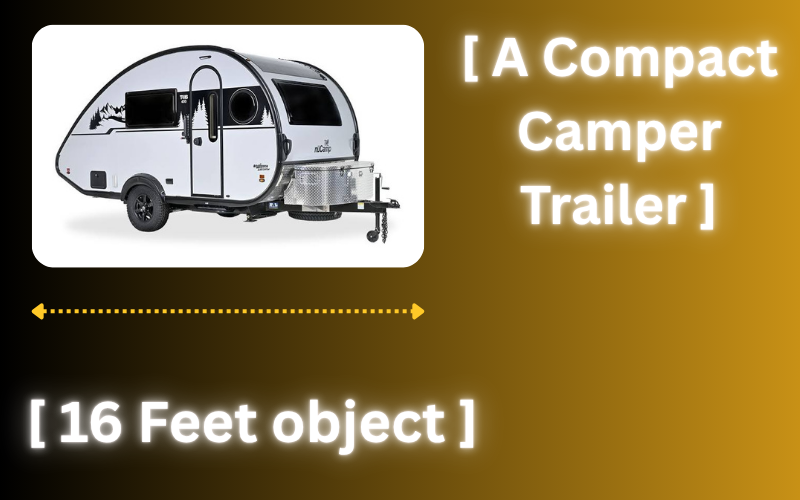
A compact camper trailer offers a vehicle-based comparison for understanding a distance of 16 feet. These trailers are designed for recreational travel and may include sleeping space, storage, a small kitchen area, or other camping facilities.
Camper trailers vary significantly in length. Some compact models have bodies shorter than 16 feet, while others approach or exceed that measurement. Their overall length may also increase when the hitch is included.
Picture a camper trailer parked beside a driveway or at a campsite. Its long body gives you a clear impression of how much space a large object can occupy. If the trailer measures close to 16 feet, it can help you visualize the distance without needing to imagine an abstract measurement.
This comparison is useful when considering parking spaces, campsite layouts, or storage areas. It can also help when planning access to a garage or deciding how much room a recreational vehicle needs.
Remember that advertised trailer dimensions may refer to the body, living area, or overall length. These are not always the same measurement. Check the manufacturer’s specifications before using a particular camper as a reference.
How it compares to 16 feet: Some compact camper trailers approach 16 feet in body length, although the overall length can be greater when the hitch is included.
3. A Limousine

A limousine is a stretched passenger vehicle commonly used for special events, formal transportation, and group travel. Its elongated body makes it an interesting comparison for understanding longer measurements.
Limousines are available in different styles and sizes. Some standard or compact stretch models may approach 16 feet, while many traditional stretch limousines are considerably longer. Therefore, the specific model matters when comparing one with this measurement.
Imagine a limousine parked along a curb. Its long body extends across a substantial section of the road or parking area. This provides a familiar vehicle-based reference for understanding how much distance 16 feet represents.
Limousines can also help you visualize the space needed for vehicle access and parking. Their elongated design illustrates why it is important to check the length of a vehicle before choosing a parking location or planning a driveway.
If you are using a limousine for comparison, check the exact model specifications. The term limousine describes a type of vehicle rather than one fixed length.
How it compares to 16 feet: A shorter limousine or particular stretch model may be close to 16 feet long, but many limousines exceed this length.
4. A School Bus Interior

A school bus interior offers another way to understand a longer distance. School buses contain rows of seats arranged along a central aisle, making their interior layouts useful for visualizing extended spaces.
A bus’s total length depends on its size and design. Smaller buses have shorter interiors, while full-size school buses may be much longer than 16 feet. However, a particular section of the interior can provide a reference close to this measurement.
Imagine standing inside a bus and looking along the rows of seats. The repeated seat arrangements help you recognize how a relatively short section compares with the full length of the vehicle.
A 16-feet interior section might extend across several seating rows and part of the central aisle. The exact number of rows depends on the bus model and the spacing between seats.
This comparison can be helpful when estimating the layout of a long room, arranging seating, or imagining the dimensions of a narrow interior space. It also demonstrates why the length of a vehicle’s interior should not be confused with its overall exterior length.
How it compares to 16 feet: A selected section of a school bus interior can span approximately 16 feet, although the full interior of a full-size bus is generally much longer.
5. A Loading Ramp

A loading ramp is used to move equipment, carts, vehicles, and other heavy items between different heights. Ramps are commonly found at warehouses, delivery areas, workshops, garages, and loading docks.
Their lengths vary according to the height difference they must cover, the weight they need to support, and the slope required for safe use. Some portable ramps are relatively short, while longer loading ramps can approach or exceed 16 feet.
Imagine a long ramp extending from a loading platform toward the ground. Its surface forms a clear line that you can compare with a 16-feet distance.
Loading ramps are especially useful as a visual reference because their length is easy to identify from end to end. They also show how a measurement can affect practical design. A ramp’s length influences its slope, the space it occupies, and the way equipment moves across it.
For a real installation, never choose a ramp based on visual length alone. The required length depends on the height difference, load rating, slope requirements, and intended use.
How it compares to 16 feet: A longer loading ramp can measure around 16 feet, depending on its purpose and design.
6. A Garden Archway
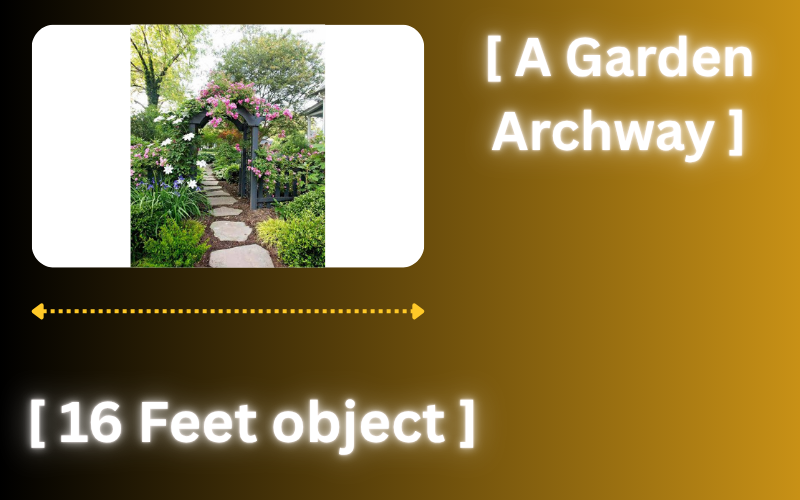
A garden archway is a decorative or functional structure placed over a garden path, entrance, or walkway. It may support climbing plants such as roses or vines, or it may serve as a feature marking the entrance to an outdoor area.
Many garden arches are relatively small, but larger connected archway structures can extend along a path or across a landscaped area. A long garden archway installation can provide a visual reference for a distance close to 16 feet.
Picture a garden path passing beneath a series of connected arches. As the arches repeat along the walkway, the overall length becomes easier to estimate. A 16-feet installation might cover a short section of a path or create a decorative passage between two garden areas.
This comparison can be useful when planning landscaping projects, positioning outdoor structures, or deciding how much space to leave between a garden entrance and nearby plants.
It is important to distinguish the length of the archway installation from the height of an individual arch. A single arch may be only a few feet tall or wide, while a connected arrangement can extend much farther along a path.
How it compares to 16 feet: A garden archway installation made from connected sections can extend approximately 16 feet along a walkway, depending on its design.
7. A Retractable Sports Barrier
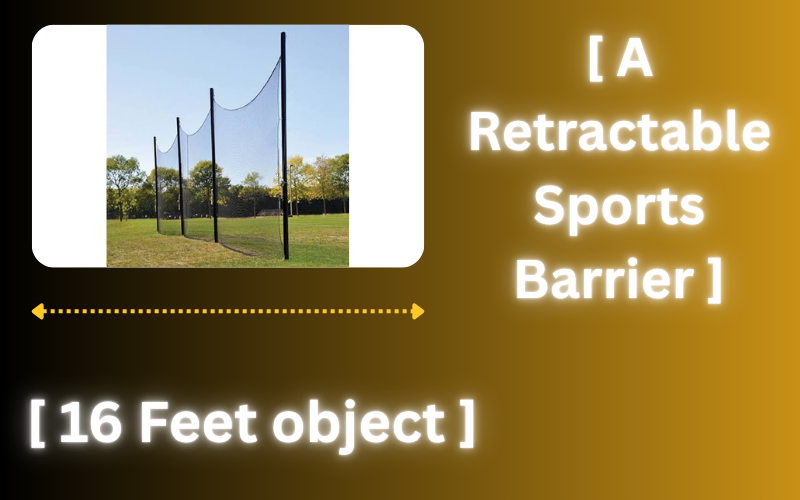
A retractable sports barrier is a portable or adjustable barrier used to separate activity areas, guide spectators, or divide spaces during sporting events. Depending on its design, it may use fabric, mesh, lightweight panels, or linked sections.
Retractable barriers are available in a range of lengths. Some are designed for small indoor spaces, while larger systems can stretch across wider areas in sports facilities, school gyms, and outdoor venues.
A barrier that extends to approximately 16 feet offers a useful comparison because it forms a long, visible line across a floor or open space. When fully extended, it can help you understand the amount of distance covered by a measurement of this size.
This example is particularly relevant when planning a temporary sports layout, setting up practice areas, or separating spectators from an activity zone.
The barrier’s length may change depending on how far it is extended. Some models have a maximum advertised span, while others can be connected to additional sections. For an accurate comparison, use the fully extended length stated by the manufacturer.
How it compares to 16 feet: A retractable sports barrier with a maximum span close to 16 feet provides a convenient way to visualize this distance.
8. A Restaurant Service Counter
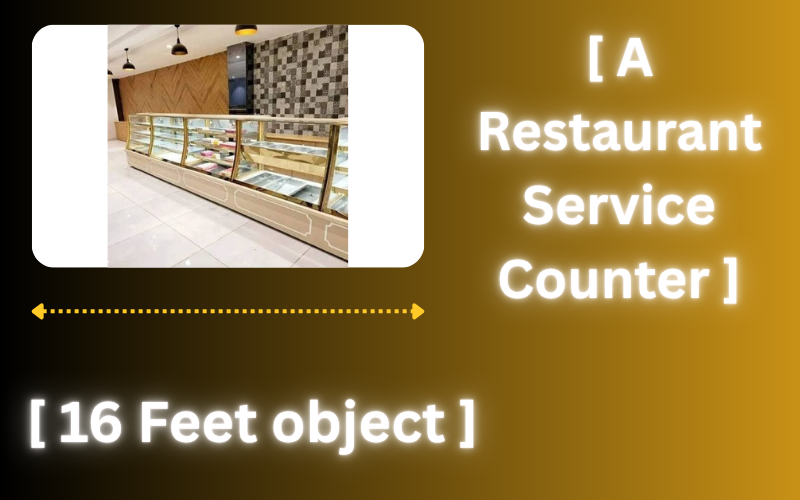
A restaurant service counter is a long work surface used for preparing orders, organizing food service, displaying items, or handing meals to customers. Counters can be found in restaurants, cafés, cafeterias, and commercial kitchens.
Their dimensions depend on the restaurant’s layout and the tasks performed at the counter. Some counters are compact, while longer commercial counters can extend across several workstations.
Imagine a service counter stretching along the front of a restaurant’s serving area. A counter approximately 16 feet long would cover a substantial section of the room and provide space for multiple service activities, depending on its design.
This comparison is helpful when visualizing the dimensions of commercial interiors. It can also provide a reference for planning cabinetry, arranging equipment, or estimating the space required for a serving area.
Keep in mind that the total counter length may include several connected sections. The usable work surface can be shorter if part of the counter is occupied by appliances, sinks, or other fixtures.
How it compares to 16 feet: A long restaurant service counter or a connected counter arrangement can measure approximately 16 feet from end to end.
Comparing All 8 Objects at a Glance
Each object offers a different way to imagine a 16-feet distance. Some are mobile, some are fixed structures, and others can be extended or assembled to cover a chosen length.
| Object | Visual Reference | Important Measurement Detail |
| A Backyard Garden Tunnel | A long covered growing structure | Check the ground-level length |
| A Compact Camper Trailer | An elongated recreational vehicle | Distinguish body length from overall length |
| A Limousine | A long passenger vehicle | Dimensions vary by model |
| A School Bus Interior | A section of a long seating area | Interior length differs from exterior length |
| A Loading Ramp | A sloped surface between two levels | Measure from end to end along the ramp |
| A Garden Archway | A decorative garden passage | Separate the installation length from arch height |
| A Retractable Sports Barrier | An extendable divider | Check its fully extended span |
| A Restaurant Service Counter | A long commercial work surface | Include or exclude connected sections consistently |
The most useful comparison depends on what you are measuring. A camper trailer may be helpful for a vehicle-related estimate, while a garden tunnel or service counter may be more relevant to an outdoor or indoor project.
Conversion Table: 16 Feet in Inches, Yards, and Metric Units
Converting 16 feet into other measurement units makes it easier to understand product specifications and compare dimensions from different sources.
| Feet | Inches | Yards | Meters |
| 4 feet | 48 inches | 1.33 yards | 1.2192 m |
| 8 feet | 96 inches | 2.67 yards | 2.4384 m |
| 12 feet | 144 inches | 4 yards | 3.6576 m |
| 16 feet | 192 inches | 5.33 yards | 4.8768 m |
| 20 feet | 240 inches | 6.67 yards | 6.096 m |
These conversions are useful when comparing measurements listed in imperial units with specifications provided in metric units. If you are ordering materials or installing equipment, use the unit required by the supplier or project plan and avoid rounding too early.
Where Can You Use a 16-Feet Measurement?
Understanding what 16 feet looks like can help with several practical tasks. Although a visual comparison is useful for early planning, accurate measurement remains essential when the dimensions affect safety, cost, or fit.
Home Improvement and Renovation
A 16-feet span can be useful when planning a room layout, estimating the length of a wall, or arranging large furniture. Before purchasing materials, measure the actual space and account for doors, windows, corners, and fixed fixtures.
Garden and Landscaping Projects
Garden tunnels and archway installations may require a defined amount of ground space. Knowing what 16 feet looks like helps you plan a path, growing area, or outdoor feature before construction begins.
Vehicle Parking and Storage
A compact camper trailer or limousine provides a reference for understanding vehicle length. However, parking requirements depend on the vehicle’s actual dimensions, turning space, access route, and any additional projections.
Commercial and Restaurant Layouts
Service counters and loading ramps can occupy significant space in commercial environments. Estimating their length can help during initial planning, but installation should follow measured dimensions and relevant design requirements.
Sports and Event Layouts
Retractable barriers can divide large open spaces into smaller zones. Knowing the intended span helps when organizing practice areas, event seating, or temporary boundaries.
How to Estimate 16 Feet Without a Measuring Tape
If a measuring tape is not available, several methods can help you estimate a 16-feet distance. These techniques are best for rough planning rather than precise construction or installation work.
Use a Known-Length Object
Find an object whose length you know and place it along the area you want to estimate. Repeating a verified 4-feet reference four times, for example, creates a total reference of 16 feet.
Make sure the objects are placed end to end without gaps or overlaps. Otherwise, the estimated distance may be too short or too long.
Divide the Distance Into Smaller Sections
It can be easier to picture 16 feet as four equal sections of 4 feet or two sections of 8 feet. Imagine these sections along the floor, wall, driveway, or garden path.
This approach is particularly useful when a full 16-feet reference is difficult to see at once.
Use Floor Tiles of Known Dimensions
If you know the dimensions of your floor tiles, you can count how many fit along a straight line. Include grout gaps when estimating the total distance.
Avoid assuming that all tiles are the same size. Confirm the tile dimensions before relying on this method.
Estimate With Your Walking Stride
Walking across a space can give you an initial idea of its length. However, stride length differs between people and can change with walking speed and terrain.
For a better estimate, compare your stride with a known distance first. If accuracy matters, verify the result using a measuring tape, ruler, or laser distance meter.
“I hope you learned a lot from this article. Check out more articles like this.”
- How Long Is 15 Feet? Discover 8 Everyday Size Comparisons
- How Long Is 14 Feet? Discover 8 Everyday Size Comparisons
- How Long Is 13 Feet? Discover 8 Everyday Size Comparisons
- How Long Is 12 Feet? Discover 8 Everyday Size Comparisons
- How Long Is 11 Feet? Discover 8 Everyday Size Comparisons
FAQs
1. How many inches are in 16 feet?
Sixteen feet equals 192 inches. This conversion is useful when measuring spaces or comparing products that list their dimensions in inches.
2. How many meters is 16 feet?
Sixteen feet equals 4.8768 meters, which is slightly less than five meters.
3. How many centimeters are in 16 feet?
Sixteen feet equals 487.68 centimeters. This measurement is useful when comparing dimensions in metric units.
4. Is 16 feet considered long?
Sixteen feet is a substantial length for many household, garden, and commercial applications. Whether it is considered long depends on the object and its intended use.
5. Can a camper trailer be 16 feet long?
Yes. Some compact camper trailers have bodies close to 16 feet long. The overall length may be greater if the hitch is included, so check the manufacturer’s specifications.
6. Can a limousine measure 16 feet?
Some limousine models may approach 16 feet, but many stretch limousines are longer. The exact length depends on the model and design.
7. How can I visualize 16 feet at home?
You can use a known-length object, count floor tiles with verified dimensions, or divide the distance into smaller sections. These methods provide estimates, so use a measuring tool when precision is necessary.
8. Why do object dimensions vary?
Objects with the same general name can have different sizes because of their design, intended use, manufacturer, and model. Always check the actual dimensions instead of assuming that every example matches a target measurement exactly.
Related Posts: How Long Is 15 Feet? Discover 8 Everyday Size Comparisons
Conclusion
Sixteen feet equals 192 inches, 4.8768 meters, or 487.68 centimeters. Although this measurement may be difficult to imagine as a number alone, familiar objects make it easier to understand.
A backyard garden tunnel, compact camper trailer, limousine, school bus interior, loading ramp, garden archway, retractable sports barrier, and restaurant service counter all provide useful ways to visualize a distance approaching 16 feet.
The exact dimensions of these objects vary, so treat them as practical comparisons rather than universal standards. If you are planning a renovation, arranging equipment, designing a garden, or checking whether something will fit, measure the actual space before making a final decision.

Pingback: How Long Is 17 Feet? Discover 8 Everyday Size Comparisons -
Pingback: How Long Is 18 Feet? Discover 8 Everyday Size Comparisons -
Pingback: How Long Is 21 Feet? Discover 8 Everyday Size Comparisons -